You can use store-bought products and have a nice lawn. Specialty herbicides add targeted options. The efficient choice is the one that matches the weed—not the biggest shelf of bottles.
DO NOT APPLY POST-EMERGENT DURING PEAK DAYTIME HEAT.
My homeowner rule: skip the hottest part of the day. Check the product’s temperature limits and the day’s forecast before spraying. A cooler morning does not make an application okay if the label prohibits the daytime high. Postpone treatment when the lawn is heat- or drought-stressed.
Limits vary by product—there is no single safe temperature for every herbicide. Follow the exact label, including rain, drying, and mowing restrictions.
For established Bermuda lawns. These options do not automatically apply to fescue, St. Augustine, or newly planted lawns. Confirm your grass and follow the exact product label.
01 / Spend where it matters
Budget or specialty?
Choice
Best fit
Tradeoff
Hand removal
A few isolated weeds
No cost, more hands-on work. Perennial roots and regrowth need attention.
Store-bought lawn spray
Small lawns and common labeled weeds
Often less money upfront; check coverage, formulation, temperature limits, and repeat treatments.
Specialty concentrate
Specific weeds or repeat lawn care
Often more upfront, with precise measuring and sprayer calibration. Compare cost per treated area, not bottle price.
Match the exact bottle. “Image” and “Weed Stop” are product families. This page refers to Image Crabgrass, Nutsedge & Weed Killer for Lawns Concentrate and Spectracide Weed Stop for Lawns Plus Crabgrass Killer Concentrate. Other formulas can have different uses and restrictions. Budget describes the entry point—not a live price comparison.
02 / Match the weed to the treatment
What’s growing in your Bermuda?
Search a name or browse a group. Tap any photo to enlarge it. Photos show the labeled species or plant part; compare leaves, stems, and seedheads too. Get a confirmed identification if you’re unsure.
9 weed groups
Broadleaf weeds
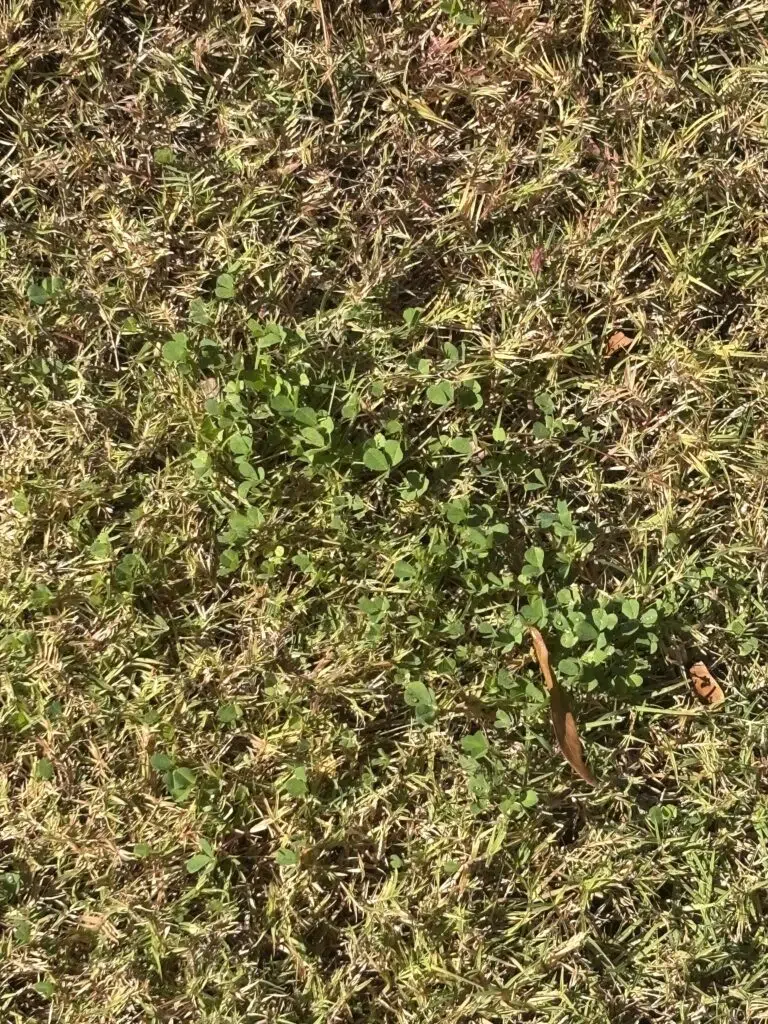
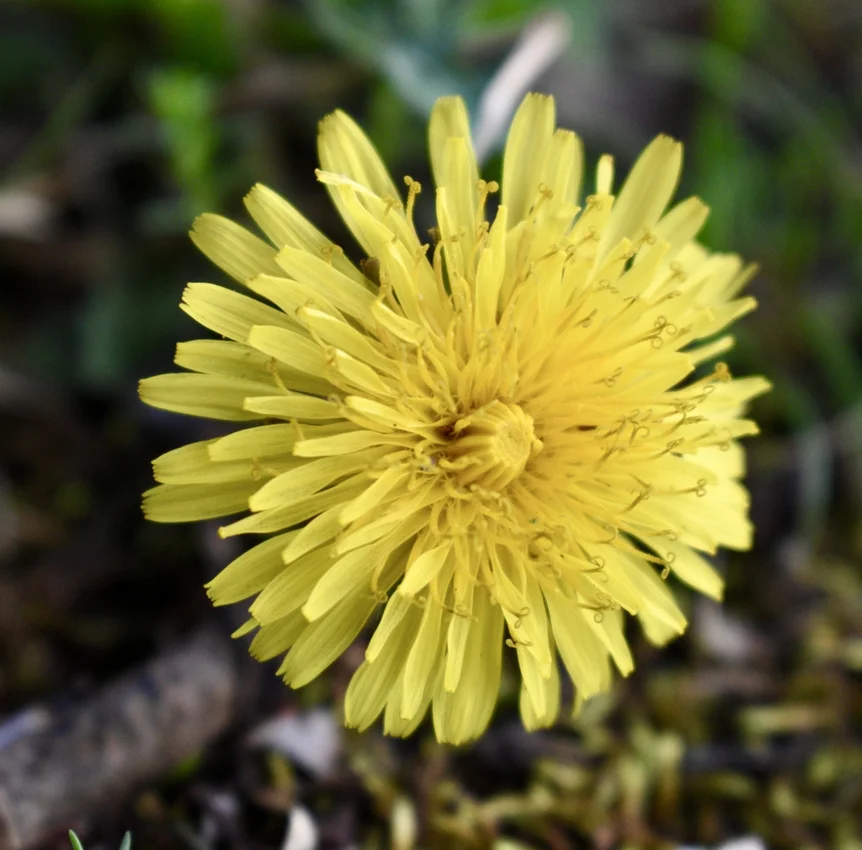
Clover & dandelion
Clover has three leaflets; dandelions form a rosette and yellow flowers. Confirm the species before treating.
Before you spray: Use one suitable product, not every option in the row. Match the exact weed on the label.
Cool-season broadleaf weeds
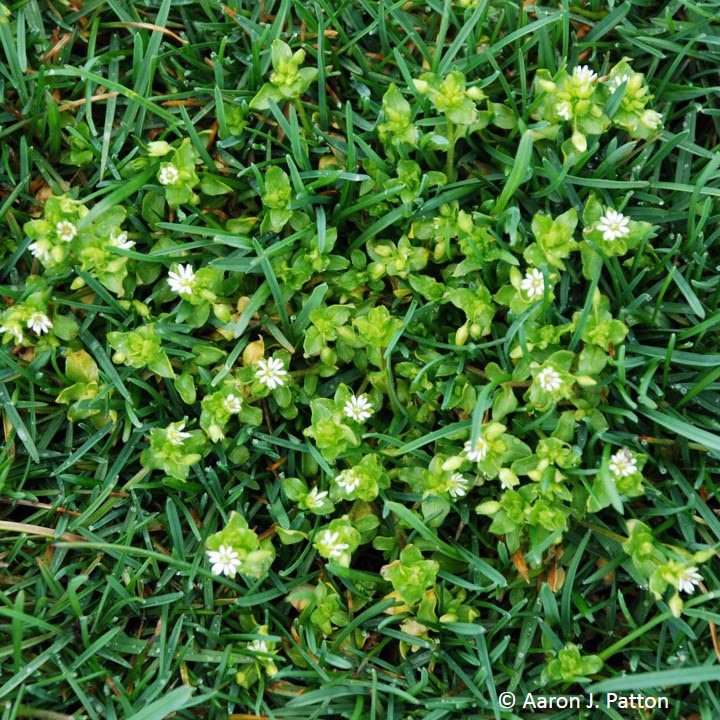
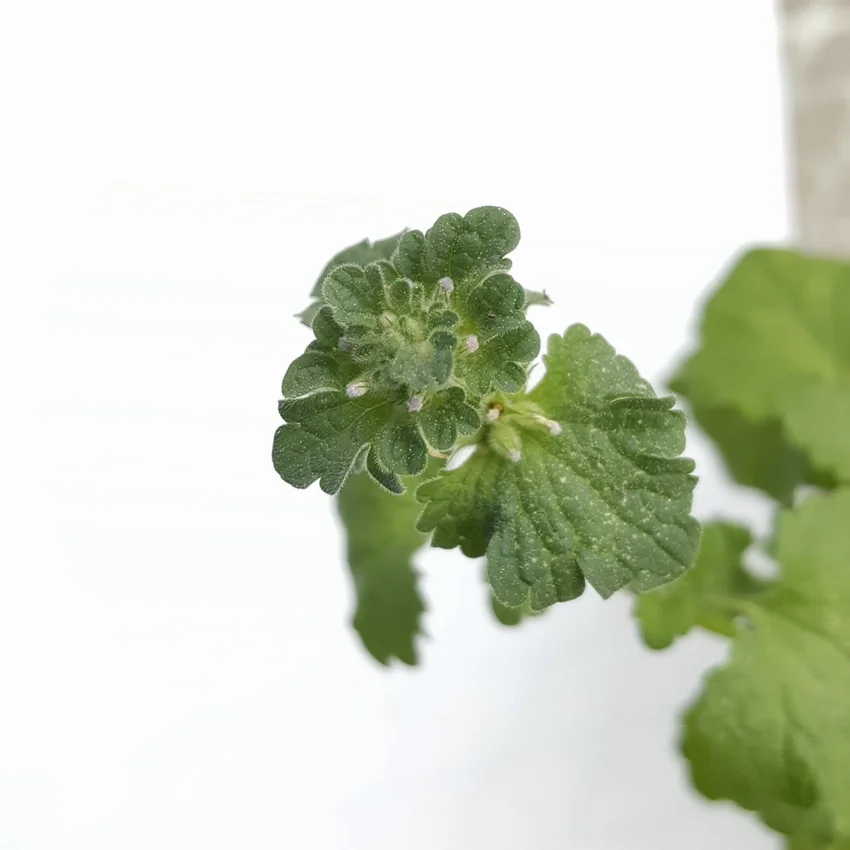
Chickweed & henbit
Often show up during the cooler months. Chickweed sprawls; henbit has square stems and small purple flowers. Identification clues are a starting point.
Before you spray: Treat young, actively growing weeds under labeled conditions.
Warm-season broadleaf weed
Spurge
TREAT EARLY — STUBBORN WHEN ESTABLISHED
Spurge can become a frustrating, persistent problem once it forms mats. Get on top of small plants early; established patches may need follow-up treatments within the label’s limits.
Low-growing, branching plants can form mats. Several spurge species look alike; confirm the ID.
Before you spray: Celsius WG is labeled for prostrate spurge. Use the rate specified for the weed and situation, and repeat only as the label allows. “More” is not automatically better: never exceed single-application or annual limits.
Annual grassy weed
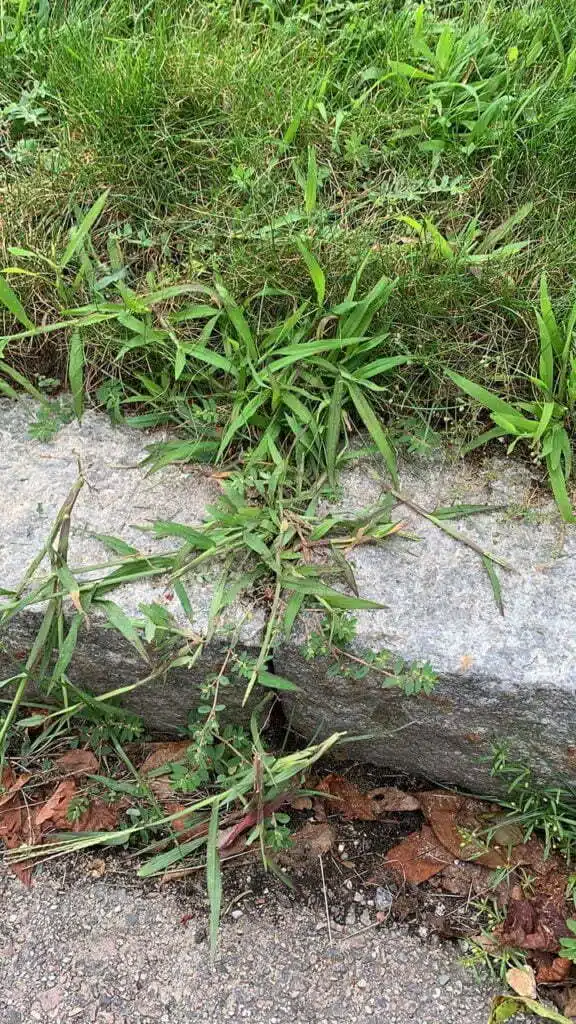
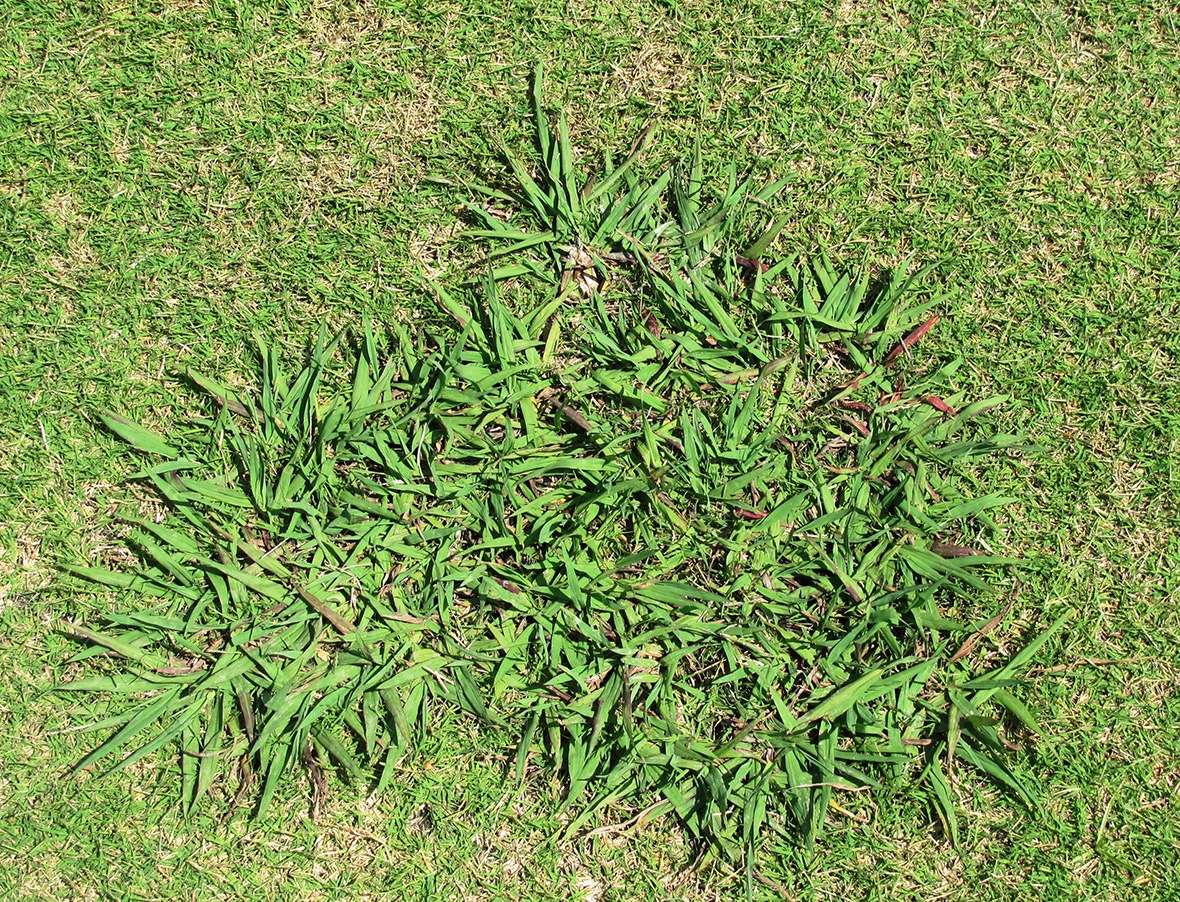
Crabgrass
Spreading grassy clumps can resemble other weeds. Confirm crabgrass rather than goosegrass or dallisgrass.
Celsius WG ↗ lists large crabgrass; effectiveness depends on species, size, and label directions.
Before you spray: Young weeds are easier targets. Mature plants may need a different labeled program. Pre-emergent helps prevent future seedlings; it does not remove existing crabgrass.
Sedges
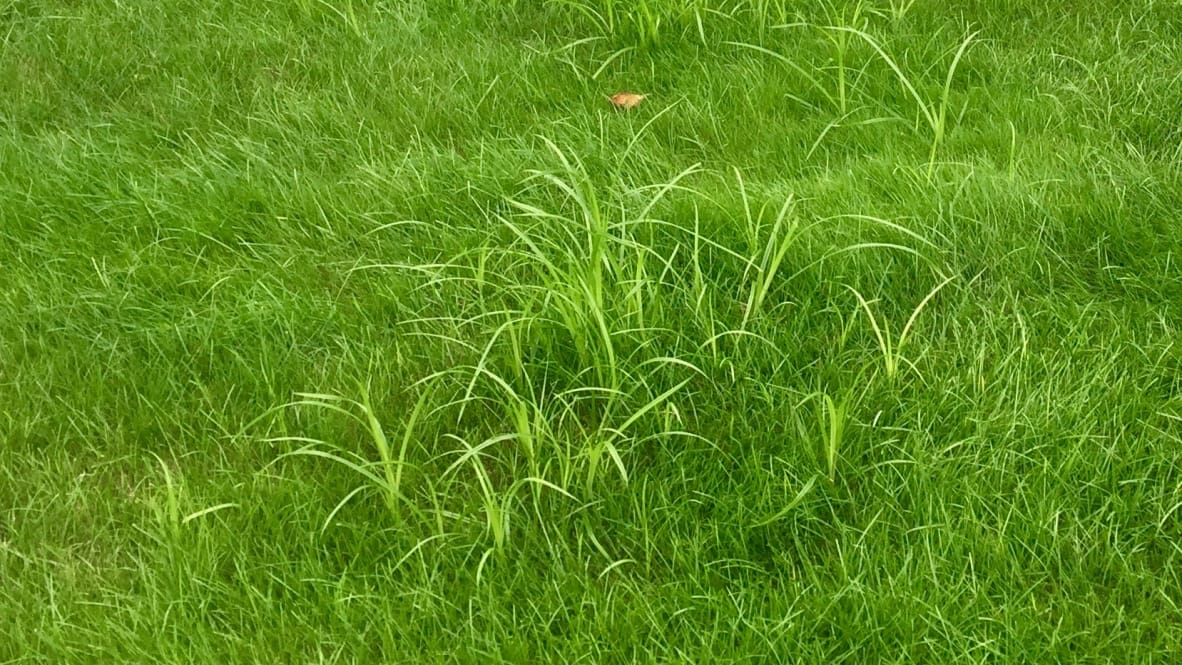
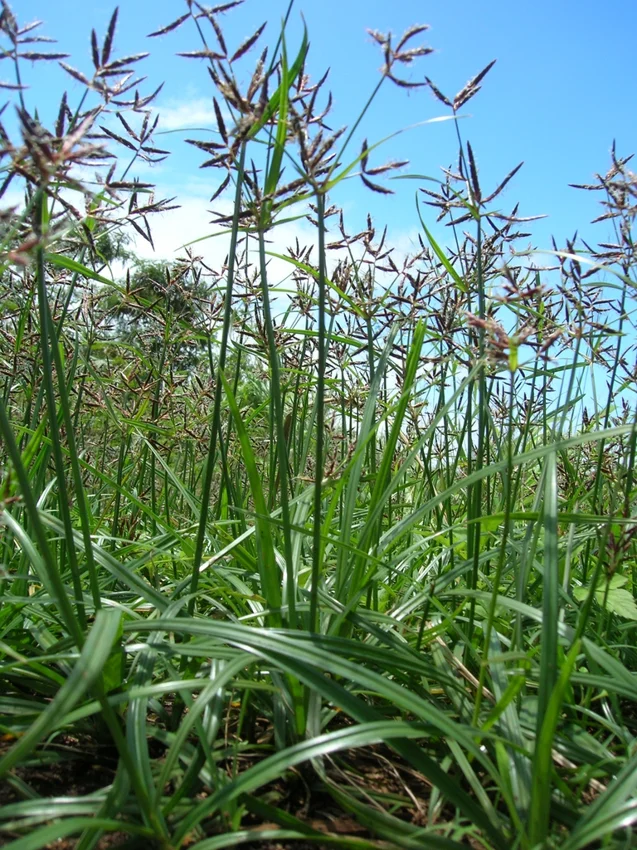
Yellow & purple nutsedge
DON’T JUST PULL ESTABLISHED NUTSEDGE.
Pulling the visible shoots often leaves underground tubers (nutlets) and rhizomes behind, so it grows back. Disturbing mature purple nutsedge can also stimulate dormant tubers to sprout. For established lawn patches, use a labeled nutsedge treatment and monitor for regrowth instead of treating it like an ordinary pull-and-done weed.
Exception: very young plants can be managed with repeated early removal before new tubers form. Pulling does not automatically create new plants—but leaving the underground system behind can keep the infestation going.
Before you spray: Underground growth can cause regrowth. Follow labeled repeat intervals. SedgeHammer and SedgeHammer+ have different mixing/adjuvant directions—read the exact package.
Warm-season annual broadleaf
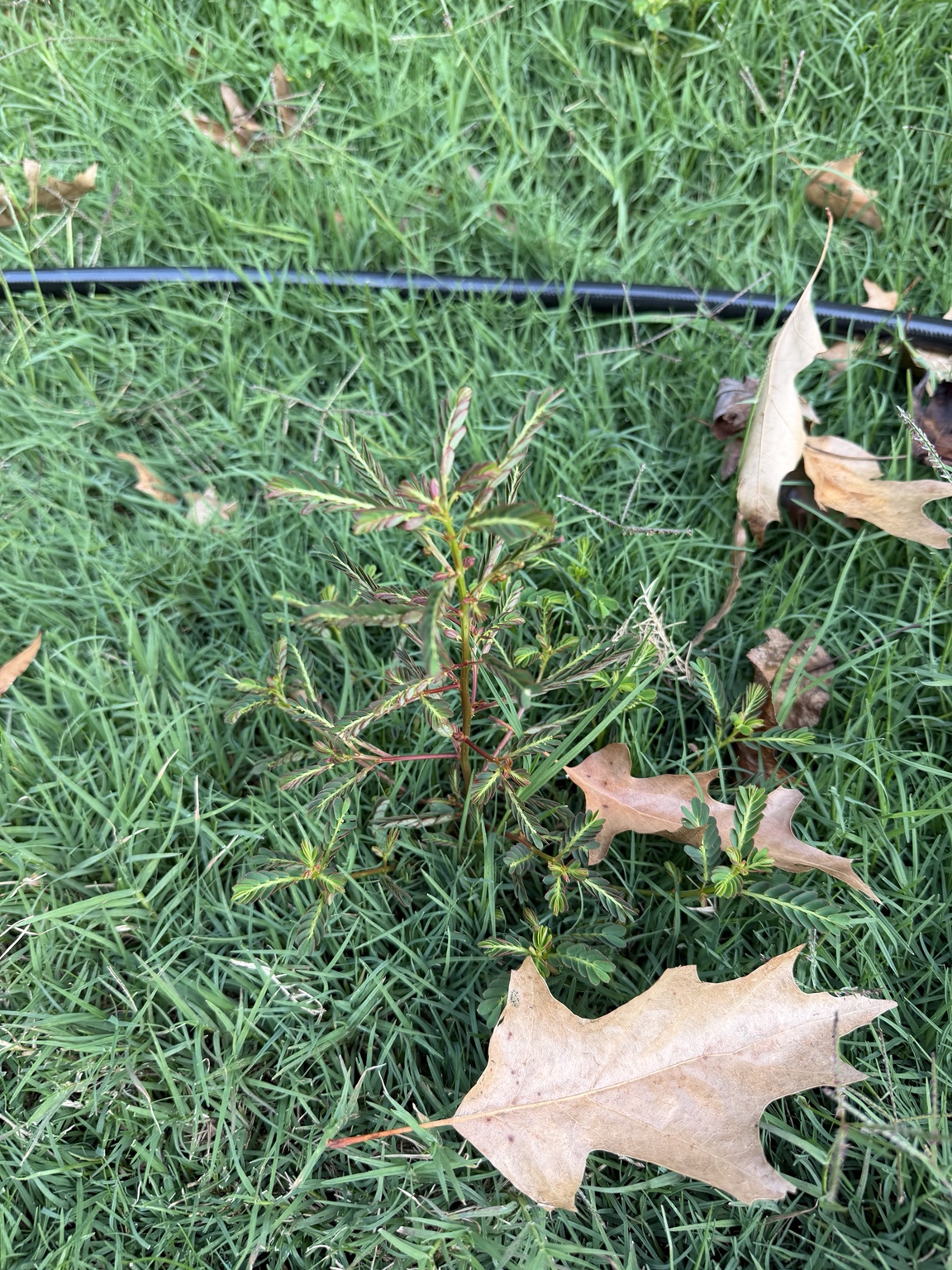
Chamberbitter
A BIG HEADACHE FOR ME THIS YEAR.
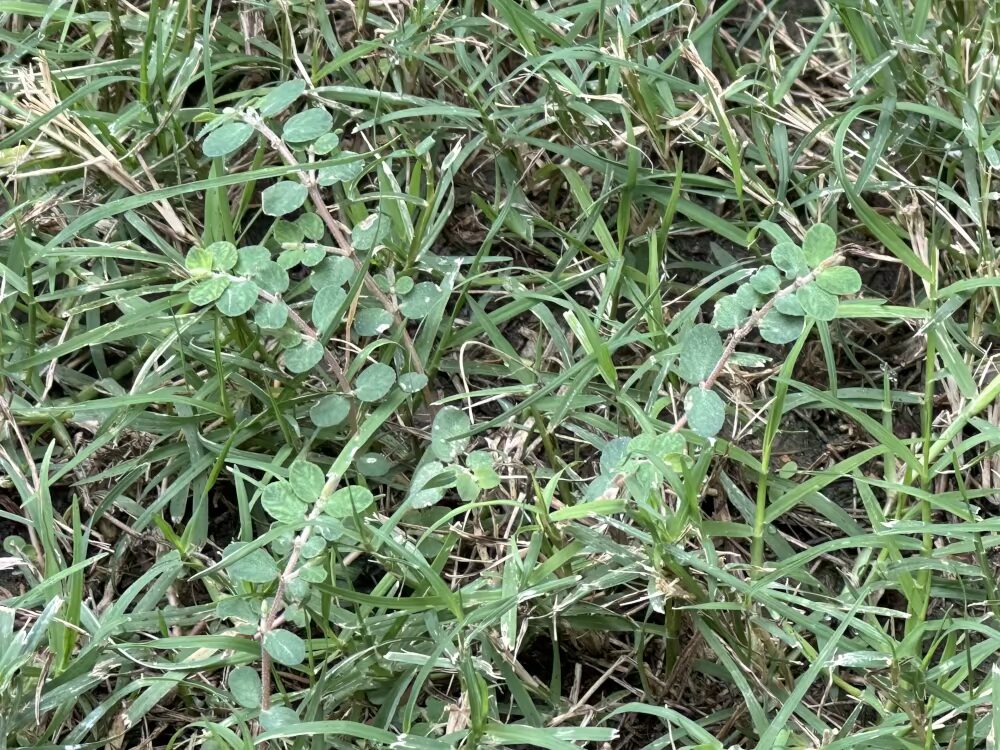
Chamberbitter has been a big pain around my lawn edges and mulch beds. Celsius seemed to knock it back, but I still had to pull some of the mature plants. This is one I want to catch while it’s small.
Look for upright stems, small oblong leaves arranged in two rows, and little round seed capsules underneath the branchlets. It looks like a tiny mimosa. Those capsules help confirm the identification.
Chamberbitter in my lawnLook underneath the branches for the round seed capsules. Tap to enlarge.
BUDGET / SMALL JOB
Pull isolated plants, including the root, while the soil is moist. Remove and bag mature plants carefully to limit seed spread. In mulch beds, maintain 2–3 inches of mulch to help block new seedlings.
SPECIALTY / TARGETED
Celsius WG ↗ controls chamberbitter in labeled turf. Target young, actively growing weeds; established plants with woody stems are harder to control. Follow your package’s rates, repeat intervals, and annual limits.
Council-Oxford recommended tank-mixing Celsius WG ↗ with Loyalty WDG ↗ for stubborn chamberbitter. I haven’t personally tested this combination yet, so this is their recommendation rather than a result from my lawn.
Before mixing, confirm both current labels permit the combination on your turf and site. Follow the more restrictive directions for rates, adjuvants, application conditions, repeat intervals, and annual limits. This is not a guaranteed one-spray fix.
Stay ahead of the seeds: Chamberbitter is an annual that comes back from seed. Removing mature survivors helps, but keep checking for new seedlings. Keep Celsius spray off ornamental plants and use it only in labeled sites. Clemson identification and control ↗
Summer weed that resembles grass
Doveweed
MY BIGGEST WEED HEADACHE.
Doveweed has been my biggest pain to deal with. I’ve sprayed it with multiple rounds of Celsius, and some has still persisted. From my experience, this is one to catch early and keep checking after treatment—not a weed I expect to disappear after one spray.
That’s my lawn experience, not a recommendation to increase the dose or shorten the interval. Follow the label’s application rates, repeat intervals, and annual limits.
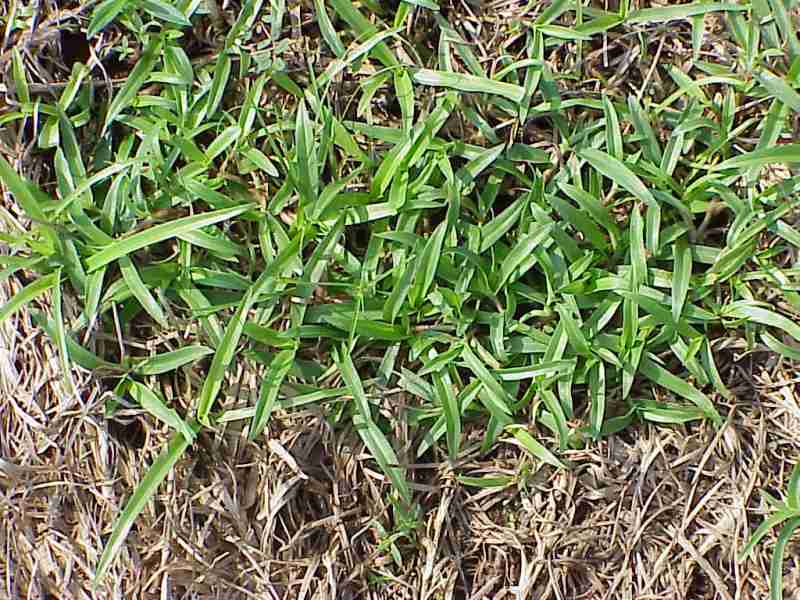
Low-growing plants with fleshy leaves and small purple flowers can blend into warm-season turf. Confirm the ID.
Doveweed growing in turf
BUDGET / SMALL JOB
Hand-remove small infestations and investigate persistently wet areas. No general-purpose budget spray is promised here.
Council-Oxford recommended tank-mixing Celsius WG ↗ with Loyalty WDG ↗ for stubborn doveweed. I haven’t personally tested this combination yet, so this is their recommendation rather than a result from my lawn.
Before mixing, confirm both current labels permit the combination on your turf and site. Follow the more restrictive directions for rates, adjuvants, application conditions, repeat intervals, and annual limits. This is not a guaranteed one-spray fix.
Before you spray: A product labeled for crabgrass may not control doveweed. Established mats may need follow-up under label directions.
Annual bluegrass
Poa annua
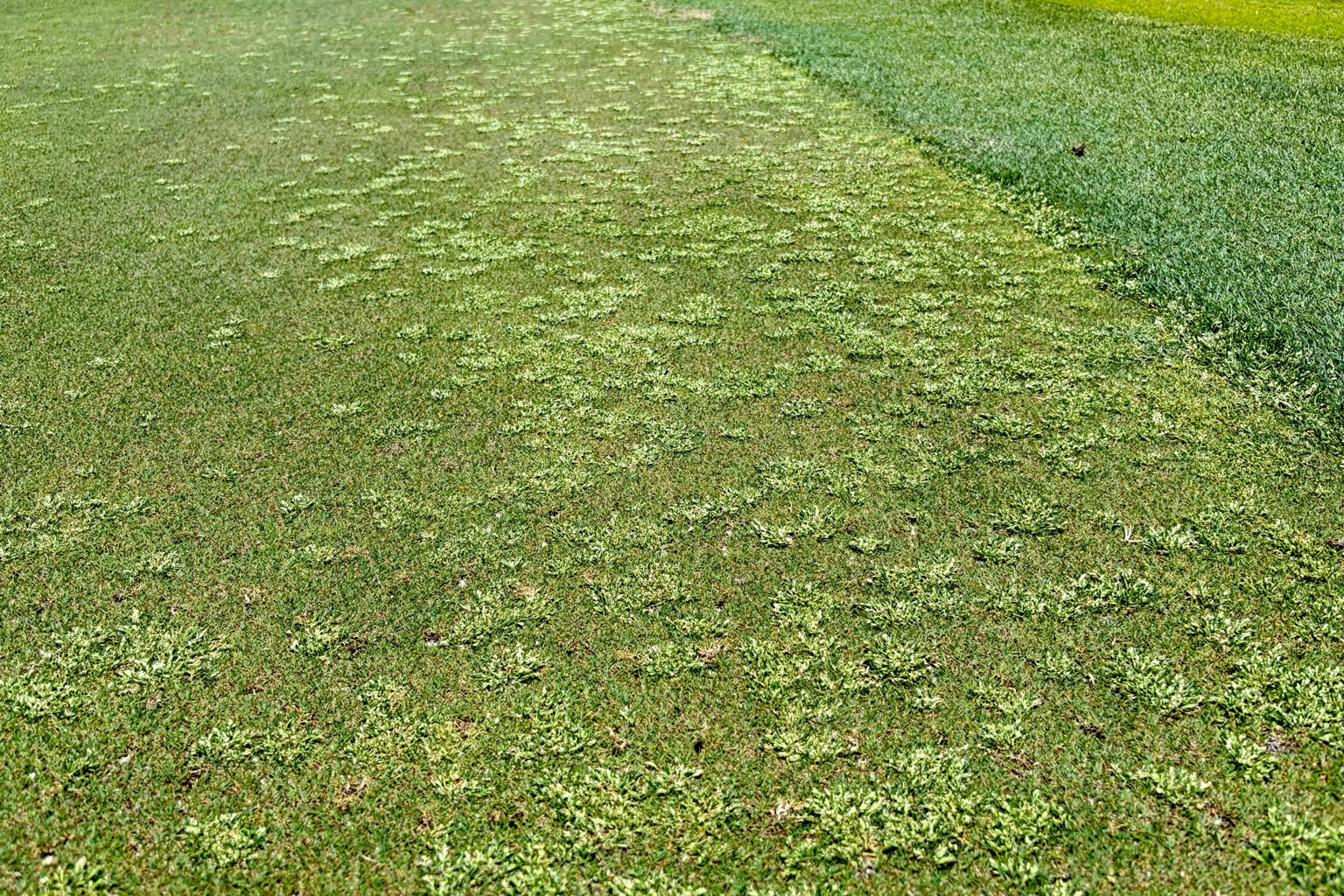
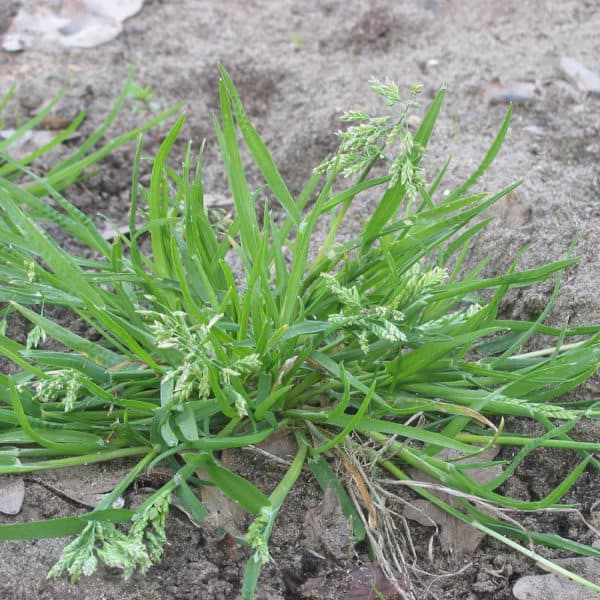
Often forms lighter-green clumps with visible seedheads, even when mowed low. Confirm the species.
Poa annua patches across a lawnPoa annua — plant and seedheads
BUDGET / SMALL JOB
Hand-remove isolated clumps. Focus your next prevention window on an appropriate pre-emergent; it will not kill plants already there.
Before you spray: These are options for established Bermuda. Confirm the grass and weed on the label; resistance can affect results.
Persistent perennial grass
Dallisgrass
VERY DIFFICULT — PLAN FOR REPEAT TREATMENTS
Dallisgrass is one of the toughest weeds to remove from Bermuda. Its perennial clumps and underground rhizomes can survive and regrow. Do not expect a quick, one-spray fix.
Coarse, persistent clumps and characteristic seedheads help distinguish it from annual grassy weeds. Get an ID before investing in treatment.
Dallisgrass clump in a lawn
BUDGET / SMALL JOB
Dig out isolated clumps, including the crown and roots, then repair the disturbed area. There is no easy budget selective-spray promise here.
SPECIALTY / TARGETED
Tribute Total ↗ is a selective option labeled for dallisgrass control in Bermuda and zoysia. Envu identifies it as the only selective herbicide labeled for this control in those grasses. Repeat applications and follow-up monitoring may still be needed. Celsius WG ↗ lists dallisgrass suppression, not eradication.
Before you spray: Do not try to turn Celsius suppression into control by using extra-heavy doses. Follow the exact label’s treatment program, rates, intervals, annual limits, and adjuvant requirements. Check the site and state registration before use.
No matching weed here yet. Clear the search or get help with identification from your local Extension office.
03 / Prevent the next round
Pre-emergent and post-emergent do different jobs.
01
Prevent seedlings.
Apply an appropriate pre-emergent before your target weeds germinate. Time spring and fall applications to local conditions and the label, including any watering-in directions.
02
Treat what’s growing.
Pre-emergent does not remove established weeds. Identify existing plants and use a labeled post-emergent or mechanical removal. Apply follow-ups only as directed.
03
Keep the barrier working.
Follow the label’s watering-in directions and reapplication intervals to maintain prevention through the season.
My prevention product:The Andersons Barricade ↗. Check its label for your grass, target weeds, rates, and seeding restrictions. Affiliate link: I may earn a commission on qualifying purchases at no extra cost to you. This guide stays free.
04 / A better application
Read. Measure. Apply. Give it time.
Do not combine products just because they appear together here. No tank-mix or universal application rate is implied. For example, Spectracide’s linked formula prohibits Bermuda applications above 90°F; Image’s linked product lists 55–85°F for best performance. Other restrictions still apply.
05 / Check the source
The product pages behind this guide.
Use the current label on your exact package. These product and reference pages provide product information and label access where available. Product links below are regular links; only Barricade above is an affiliate link.
This is a starting toolkit, not every weed or every treatment. Control can depend on weed maturity, growing conditions, and resistance. Recheck the label before each application.