Catch armyworms.
Before the damage.
A heavy infestation can strip a lawn in just a few days. Don’t wait for a small brown patch to spread across the front yard.
Meet the grass eaters.
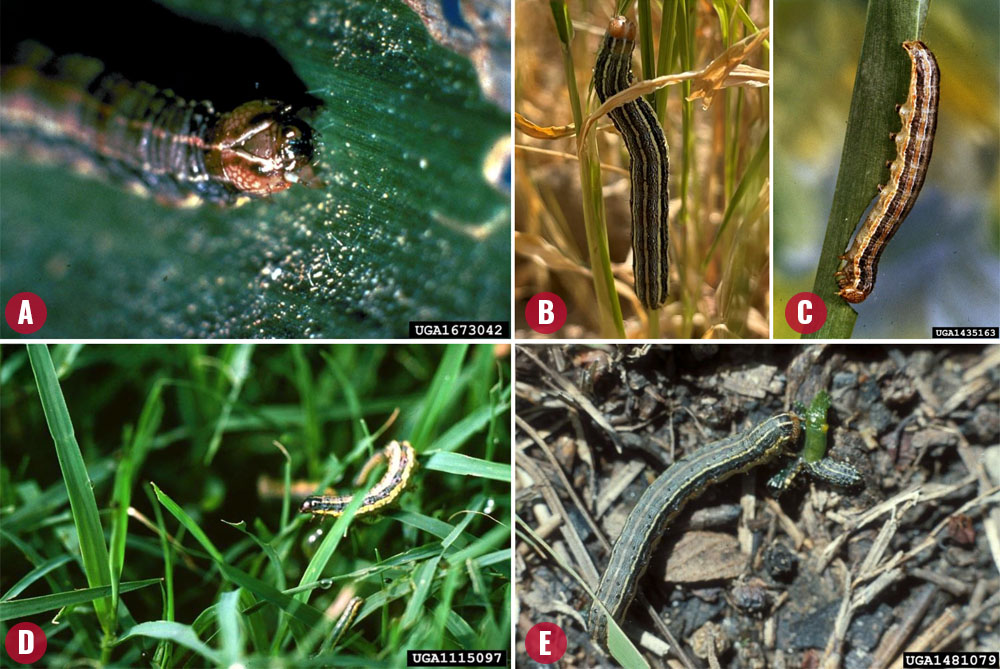
Tap to enlarge. Photo panel: UGA Extension, Circular 1335, Figure 1. Credits: A. Steve L. Brown, University of Georgia, Bugwood.org; B. Robert Wolverton; C. Clemson University–USDA Cooperative Extension Slide Series, Bugwood.org; D. Charles T. Bryson, USDA Agricultural Research Service, Bugwood.org; E. Frank Peairs, Colorado State University, Bugwood.org.
Look for caterpillars with lengthwise stripes and an inverted Y on the head. Check for chewed grass blades, caterpillars down in the canopy, and patches that expand quickly. Brown grass alone doesn’t confirm insects.
Try a small soap flush.
If a patch suddenly turns brown, check the grass and the greener edge beside it. A soap flush can bring hidden caterpillars to the surface.
- Mix ½ fluid ounce (1 tablespoon) of plain liquid dishwashing soap in 1 gallon of water. Plain Dawn is one option; avoid bleach, disinfectant, and degreaser additives.
- Pour over a small test patch, rather than treating the whole lawn.
- Watch closely for about a minute as irritated caterpillars emerge. Collect or photograph them for identification.
- Rinse the test area with clean water afterward to reduce soap injury, especially in heat or drought.
This is a detection method, not a lawn insecticide treatment. If the first test is empty, check other active edges; it doesn’t rule out insects elsewhere.
Acelepryn is my prevention tool.
Acelepryn insecticide
I use Acelepryn as my armyworm preventer. A small bottle goes a long way on my small lawn, which helps the cost per application. How long yours lasts depends on lawn size, the labeled rate, storage, and product condition.
Shop Acelepryn at Council-Oxford ↗You don’t need a backpack sprayer to start.
My first year, I used a roughly $5 hand sprayer from Lowe’s. It wasn’t fun, but it did the job. A basic hand sprayer can work for a small yard if you calibrate it, measure accurately, and cover the area evenly. Sprayer size doesn’t change the labeled amount needed for your lawn.
If they’re already feeding, act quickly.
Confirm the insect and treat while larvae are small. Use a product labeled for armyworms on residential turf, and follow its directions for coverage and watering. For large caterpillars or fast-spreading damage, ask Extension for an appropriate outbreak treatment rather than assuming a previous preventive application still covers you.
Current Acelepryn label ↗Manufacturer’s armyworm guidance ↗NC State treatment guidance ↗
Not sure what caused the patch?
Scalping, drought, disease, and insects can look similar. Diagnose the cause before buying another product.