Fungus can spoil a lawn even when you’re mowing and watering. But before you reach for a fungicide, figure out whether disease is actually the problem.
Scalping on uneven ground, dry soil, mower damage, fertilizer injury, insects, and normal Bermuda dormancy can all change the lawn’s color. A brown circle alone is not a diagnosis. This page helps you investigate; your local Extension office can help confirm disease.
01 / Check before treating
What happened before the spot?
What you notice
What to investigate
Same high spots turn brown right after mowing
Scalping, uneven ground, cutting height, and mower setup.
A dry patch, folded grass blades, or footprints that linger
Soil moisture and uneven sprinkler coverage. Check the soil instead of automatically adding water.
Stripes or spills after spreading or spraying
Application overlap, fertilizer spills, or product injury.
Rapid chewing damage or missing leaf tissue
Look closely for caterpillars or other insects; a fungicide won’t solve insect damage.
Expanding patches, leaf lesions, or recurring seasonal spots
Disease is possible. Photograph the edge and affected grass blades, note the conditions, and get an ID.
More than one issue can occur at once. Check both affected and healthy areas before deciding what to change.
02 / Know what you’re looking for
Common disease patterns.
This guide focuses on disease problems in Bermuda. Compare these reference photos, tap to enlarge, and read the product options under each disease. Photos help with recognition; they don’t confirm a diagnosis by themselves.
Bermuda / Spring symptoms
Spring dead spot
What it did to my lawn
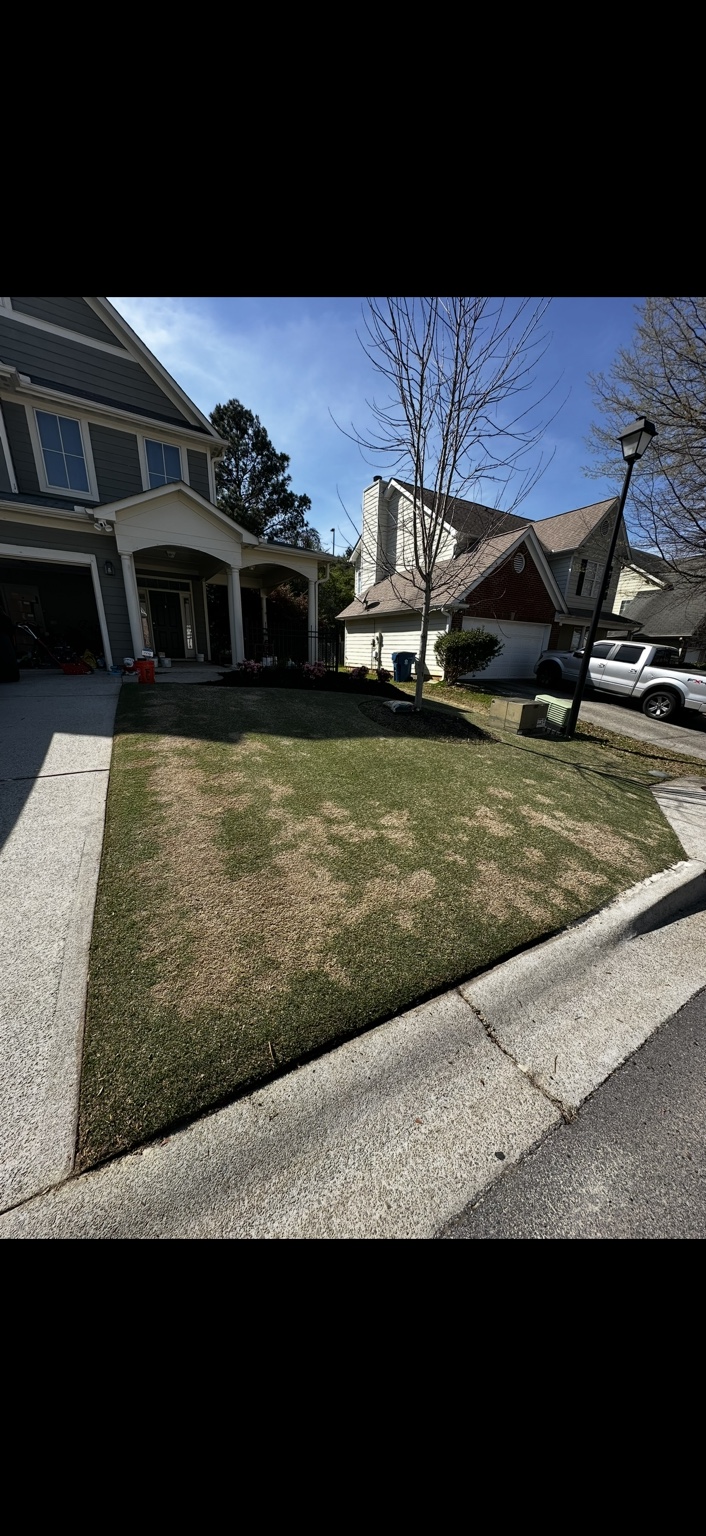
Spring dead spot killed about 30% of my front lawn and took weeks to recover from. This wasn’t just a few brown spots—it was a major setback. That’s why I take fall prevention seriously.
My front lawn before recoveryThe damage I worked to fill back in with Bermuda plugs, sand, watering, mowing, and fertilizer. Tap to see the full photo.
My recovery process / After the damage is there
Get the bare spots filling back in.
DO NOT SEED THE PATCHES IN YOUR ESTABLISHED BERMUDA.
My approach was to use plugs of matching Bermuda and encourage the surrounding grass to spread. Adding a different seeded Bermuda can leave a patch that looks different from the rest of the lawn. Hybrid Bermuda is established vegetatively, not from matching seed.
Plug the damaged spots.
I used a plug tool to move healthy Bermuda into the bare areas. Use healthy, matching turf—not plugs from diseased patches—and clean the tool so you aren’t moving contaminated soil around.
Lightly work sand around the plugs.
I covered the spots with sand as part of my recovery process. Keep live grass blades and growing points exposed; don’t bury or smother the plugs. Sand smooths and supports the surface—it doesn’t treat the fungus or create new grass.
Water for establishment.
Keep plugs from drying out while they root. This is recovery watering, not my normal once-a-week routine. As roots establish, transition toward deeper, less frequent watering.
Mow and fertilize for active growth.
Once plugs are rooted enough to stay in place, mow consistently without scalping them. Follow your Bermuda fertilizer plan and soil-test recommendations; extra-heavy nitrogen isn’t a cure. Healthy plugs and surrounding runners can spread into the gaps during active growing weather.
Give it growing time. Mine took weeks. Plugging repairs the damaged lawn; it does not eliminate the spring dead spot problem. Keep a fall prevention plan for affected areas so you aren’t repairing the same patches every spring.
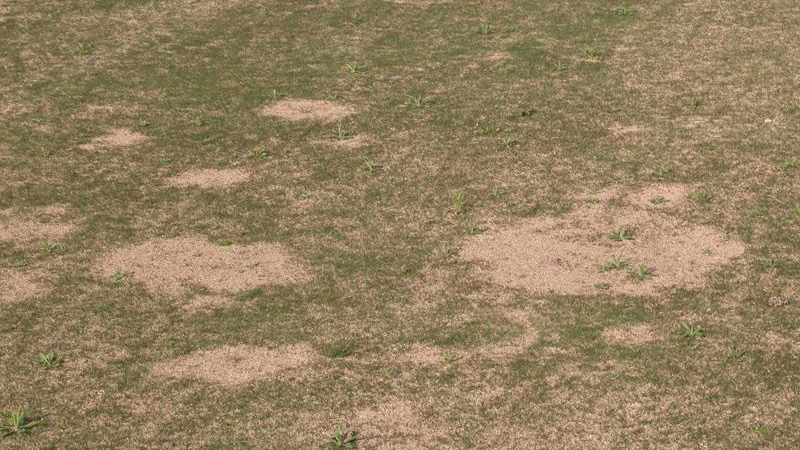
Clue: Dead, bleached patches remain as surrounding Bermuda greens up. Spots can return in the same areas.
Timing: Prevention targets infection in fall. A spring application won’t bring dead tissue back; recovery depends on healthy Bermuda spreading into the area.
Manage contributing stress and plan fall treatment with local guidance. Control may take more than one season.
Eagle 20EW ↗ and Headway G ↗ are labeled options I’ve used. Build the application timing around your local fall soil temperatures and the exact label.
Treatment notes
Do not wait for spring patches and expect a rescue application to revive dead Bermuda. Follow disease-specific rates, repeat timing, and watering-in directions. Control can take multiple seasons.
Regular product links. Follow the current label for your turf, disease, rate, interval, application method, and reentry. Listed options are alternatives—not instructions to combine them.
Bermuda & other turf / Leaf disease
Dollar spot
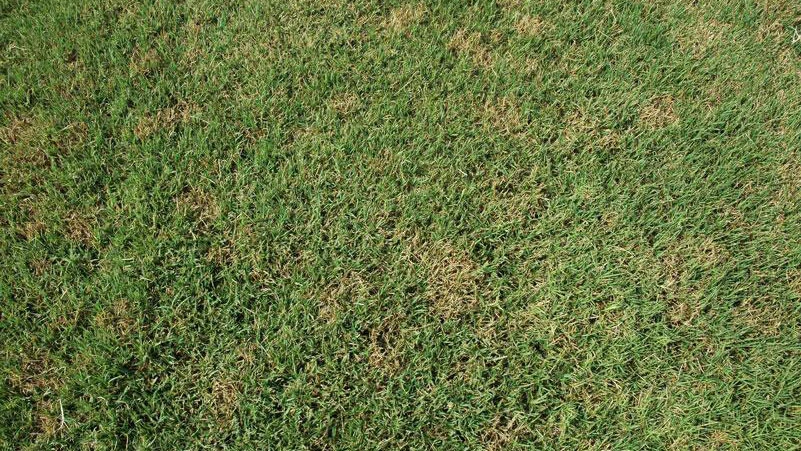
Dollar spot on Bermuda — small straw-colored patchesPhoto source: NC State Extension TurfFiles · Resized for display
Clue: Small straw-colored patches that can merge; leaf lesions may have darker borders.
Very manageable—especially when caught early.
Dollar spot is treatable with the right disease-specific product and good lawn care. It doesn’t automatically mean a major lawn reset. Damaged grass still needs growing time to recover after disease activity is controlled.
Watch prolonged rainy stretches. Repeated rain, humid weather, and heavy dew can keep grass blades wet long enough for dollar spot to develop. It can show up even when you haven’t been overwatering. Heavy rain alone isn’t a diagnosis; temperature, nutrition, and turf stress also matter.
“Leaf wetness” means water on the grass blades—not fallen tree leaves. Keep nutrition appropriate, avoid adding unnecessary irrigation during rainy weather, and choose a fungicide specifically labeled for dollar spot. Drought stress can worsen it too, so drying the lawn out excessively isn’t the answer.
Specialty options I’ve used: Headway G ↗ or Eagle 20EW ↗. Do not choose azoxystrobin alone (such as DiseaseEx or Caravan G’s fungicide component) as your dollar spot treatment. Improve leaf-wetness management and correct deficient nutrition too.
Regular product links. Follow the current label for your turf, disease, rate, interval, application method, and reentry. Listed options are alternatives—not instructions to combine them.
Bermuda / Spots to thinning
Leaf spot & melting out
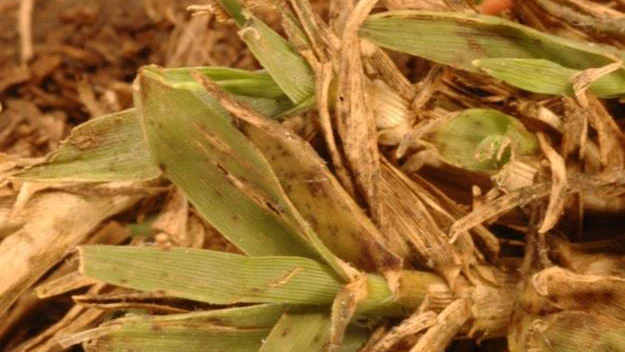
Leaf spot / melting out on Bermuda — close-up of affected grass bladesPhoto source: NC State Extension TurfFiles · Resized for display
Clue: Small dark leaf spots can progress to yellowing and thinning; severe disease can affect crowns and runners.
A close look at individual grass blades and the affected patch edge is more useful than a distant lawn photo.
Confirm the disease and reduce turf stress. Mowing, moisture, and fertilizer decisions should fit the diagnosis.
Scotts DiseaseEx ↗ lists leaf spot and melting out. Confirm the actual disease before treating—gray leaf spot and other leaf diseases are not interchangeable diagnoses.
Treatment notes
Another option I’ve used: Eagle 20EW ↗ lists leaf spot and melting out. Choose the label directions for your disease and turf. Protect healthy growth while correcting contributing mowing, moisture, or fertility stress.
Regular product links. Follow the current label for your turf, disease, rate, interval, application method, and reentry. Listed options are alternatives—not instructions to combine them.
03 / Make the lawn less inviting to disease
Better habits come first.
01
Manage leaf wetness.
For established turf, avoid frequent evening watering that keeps grass blades wet all night. Water early when practical, account for rainfall, and correct persistently wet areas. New seed needs a different watering routine.
02
Keep stress down.
Use a sustainable mowing height, keep cutting edges sharp, and avoid repeated scalping. Address shade, airflow, compaction, and drainage where they contribute.
03
Feed for the diagnosis.
Use a soil-test-based plan. Low nitrogen can favor dollar spot, but extra nitrogen is not a universal disease treatment and can worsen other diseases.
Preventive and curative rates can differ. Use the label’s instructions for the disease and situation. Fungicides protect or limit infection; they do not instantly turn damaged grass green again.
04 / Choose by disease, not bag color
My products & homeowner options.
Start with a confirmed target. The products below are options to evaluate, not a stack to apply together. These are regular product links; no affiliate tracking or discount code has been added.
COMBO
Council-Oxford / In my program
Caravan G
I’ve used Caravan G. It combines the fungicide azoxystrobin with the insecticide thiamethoxam. It is not a fungus-only product; choose it when the combined treatment fits your situation and label.
Check the exact disease and insect claims. Do not assume it handles every fungus or replaces my separate armyworm plan.
An azoxystrobin product to evaluate for diseases listed on its label. Check the target and turf type; this is not a blanket dollar spot recommendation.
Check the exact formulation and label; the manufacturer lists brown patch, dollar spot, and other diseases for its lawn fungus-control line. Packages and application directions vary.
Changing brands isn’t always rotation. Compare active ingredients and FRAC groups. Follow label resistance-management instructions, application intervals, annual limits, watering directions, PPE, and reentry restrictions. Two products may share the same fungicide chemistry.
05 / If the patch keeps spreading
Get an answer before another bag.
Record when it started, what changed, irrigation, recent fertilizer or sprays, and whether the area is getting bigger. Take a wide photo plus close-ups of grass blades and the patch edge. Ask your Extension office how to submit a useful sample before digging one up.
If treatment isn’t helping, revisit the diagnosis, conditions, and application—not just the rate. Fungicide cannot fix scalping or drought, and surviving disease can need a different labeled approach.